Every spring, a single jacaranda tree in Sydney can stop traffic, literally. Streets turn a soft, dreamy purple, footpaths are carpeted with fallen blooms, and photographers line up before sunrise to get the shot. It’s one of the city’s most-loved seasonal events, and if you’re wondering where to see jacarandas in Sydney this year, you’re in the right place.
Spotting jacaranda trees in Sydney in full bloom is a genuine bucket-list moment for locals and visitors alike. Sydney’s spring season runs from September to November, making it a beautiful time to explore the city’s outdoor spaces. For more information on the season, check Australia’s official spring guide. This guide previews the best-known streets, parks, and campuses where the purple show is biggest, plus a few tips for photographing them properly.
When Is Jacaranda Season in Sydney?
Jacaranda season generally kicks off in October and runs through November, with the peak display for most of the city’s iconic purple trees landing somewhere in the middle. Jacaranda trees in Sydney don’t flower on a fixed calendar date each year; the exact timing depends on temperature and rainfall in the lead-up to spring, so Sydney jacaranda season can shift by a week or two either way.
A warm, dry September tends to bring jacaranda trees in Sydney into bloom earlier, while a cooler spring can push the peak display closer to November. Either way, once flowering starts, the display usually lasts two to three weeks before the petals begin to drop. If you’re interested in seeing more seasonal blooms around the city, check out this guide to Where to Find Spring Flowers in Sydney for additional gardens and blooming spots.
Best Places to See Jacaranda Trees in Sydney
If you’re after where to see jacarandas in Sydney specifically, these four spots consistently deliver the best displays each year.
McDougall Street, Kirribilli
If you’ve seen a photo of Sydney jacarandas online, there’s a good chance it was taken here. McDougall Street is home to one of the most photographed examples of a jacaranda tree in Sydney, thanks to its dense, overlapping canopy of purple blooms arching over a quiet residential street.
It’s easily one of the best jacaranda spots in Sydney for a classic, postcard-style shot, and it’s only a short walk from harbour views if you want to extend the outing. McDougall Street jacarandas and the wider Kirribilli jacaranda displays tend to peak in late October, so aim for an early morning weekday visit to avoid the crowds.
University of Sydney
The University of Sydney is another favourite for anyone chasing jacaranda photography in Sydney. Its historic sandstone quadrangle, with the Gothic-style Quadrangle building as a backdrop, makes every University of Sydney jacaranda tree feel like part of the architecture itself. Wander the main lawns and courtyards during peak bloom, and you’ll find plenty of spots to combine flower viewing with a look at the campus’s history.
Paddington
Paddington’s leafy, terrace-lined streets are full of jacarandas in Sydney worth seeking out, especially around the older residential blocks near the shops and cafés. It’s a great option if you want to turn your flower-spotting into a relaxed walking route — admire jacaranda trees in Sydney at almost every turn, then stop for a coffee or browse the local boutiques along the way.
Parramatta
For visitors who want to look beyond the CBD, Parramatta’s parks and streets offer some of the best jacaranda spots in Sydney outside the inner city. Mature Sydney jacaranda trees line several of the area’s parks and older streets, and you can easily pair a visit with Parramatta Park or other nearby attractions for a fuller day out. It’s a good reminder that jacaranda trees in Sydney aren’t confined to the inner suburbs. Tips for Photographing Jacarandas in Sydney A few small habits make a big difference when you’re photographing Sydney jacaranda trees:
Frame the blooms against architecture, harbour views, or a quiet street for context.
Try wide-angle shots looking straight down a jacaranda-lined street for that tunnel effect — any well-placed jacaranda trees in Sydney can anchor the whole frame.
Include fallen petals on the footpath as part of the composition — they photograph beautifully.
Be mindful of residents’ driveways and footpaths, and avoid blocking access while you shoot.
Wear comfortable shoes if you’re planning to visit more than one location in a day.
Final Thoughts
There are plenty of ways to experience jacarandas in Sydney, from a single quiet street in Kirribilli to a historic university campus or a relaxed neighbourhood walk in Paddington. Jacaranda trees in Sydney offer a slightly different backdrop, alongside the roses, pansies and other Sydney spring flowers that bloom around the same time. Since flowering dates shift a little each year, it’s worth planning your visit around the actual bloom rather than a fixed date, and checking in on your chosen spot as October approaches. If you want to experience more colourful blooms during spring, you can also explore theBowral Tulip Time Festival 2026, held in the nearby Southern Highlands.
FAQs About Jacaranda Trees in Sydney
1. When is jacaranda season in Sydney?
Jacaranda season in Sydney typically runs from October through November, with most trees reaching peak bloom in mid-to-late October.
2. Where can I see the best jacarandas in Sydney?
McDougall Street in Kirribilli, the University of Sydney, Paddington, and Parramatta are among the most reliable places to find jacaranda trees in Sydney in full bloom.
3. Where is McDougall Street in Sydney?
McDougall Street is a residential street in Kirribilli, on Sydney’s lower North Shore, known for its dense canopy of purple jacarandas.
4. When do jacarandas bloom in Sydney?
Most trees begin flowering in October, though the exact date for any given jacaranda tree in Sydney can vary with the weather each year.
5. What is the best time of day to see Sydney jacarandas?
Early morning is best, both for softer photography light and for avoiding the crowds that build up around busy jacaranda trees in Sydney later in the day.
London blends centuries-old landmarks with modern attractions, world-class culture, buzzing food scenes, and quiet corners most visitors never find. This guide covers the best places to visit in London in 2026, from the icons everyone puts on their list to a handful of hidden gems locals actually love. Whether you’re after a classic list of places to visit in London, England, or something a bit different, here’s where to spend your time.
15 Best Places to Visit in London in 2026
Here are the 15 best places to visit in London for the first-time visitor.
Tower of London
About the place: This UNESCO-listed fortress has guarded the Crown Jewels for nearly a thousand years of royal history.
Why first-time visitors should go: It tops nearly every list of the top 10 places to visit in London, and the Yeoman Warder tours have a way of bringing all that history to life.
Best time: Early morning, before the tour groups pile in.
Buckingham Palace
About the place: The King’s official residence, and the backdrop for one of the city’s most famous daily rituals, the Changing of the Guard.
Why first-time visitors should go: It’s one of the must-see places to visit in London for the pageantry alone, even if you skip the State Rooms tour.
Best time: Late morning, right around when the ceremony runs.
Westminster Abbey
About the place: A Gothic masterpiece that’s hosted royal coronations for nearly a thousand years.
Why first-time visitors should go: Few places pack this much architecture and history into one building.
Best time: Weekday mornings, when it’s at its quietest.
Big Ben & Houses of Parliament
About the place: London’s most photographed skyline pairing.
Why first-time visitors should go: Even without going inside, it’s essential for photos and a real feel for the city’s political heart.
Best time: Early evening, when the light does the building justice.
London Eye
About the place: This giant wheel spins you up for panoramic views stretching up to 25 miles on a clear day.
Why first-time visitors should go: It regularly ranks among the top 10 places to visit in London, and it’s a genuinely useful way to get your bearings early in a trip.
Best time: Early morning or after 4 pm, when the queues thin out.
Tower Bridge
About the place: A Victorian icon with a glass-floor walkway suspended right over the Thames.
Why first-time visitors should go: The engine rooms and that walkway view aren’t quite like anything else in the city.
Best time: Sunset, hands down, for the most dramatic photos.
British Museum
About the place: Home to the Rosetta Stone and treasures pulled from civilisations across the ancient world.
Why first-time visitors should go: It’s free to walk in, and it’s one of the must-see places to visit in London for anyone who genuinely loves history.
Best time: Weekday afternoons, noticeably calmer than weekends.
Natural History Museum
About the place: Dinosaur skeletons, a suspended blue whale, and Victorian architecture so striking it competes with the exhibits.
Why first-time visitors should go: It’s one of the best free places to visit in London, and families in particular tend to love it.
Best time: Right at opening, before the school groups descend.
St Paul’s Cathedral
About the place: Sir Christopher Wren’s masterpiece, best known for its dome and the famous Whispering Gallery.
Why first-time visitors should go: It’s one of the more photogenic places in London to visit, with some of the city’s best views waiting at the top.
Best time: Early morning, before the tour groups take over.
Hyde Park
About the place: One of London’s largest royal parks, home to the Serpentine lake and the ever-lively Speakers’ Corner.
Why first-time visitors should go: Sometimes you just need a proper break between sightseeing stops, and this is where to take it.
Best time: Spring and summer afternoons, when the park really comes alive.
Covent Garden
About the place: Street performers, boutique shops, and a historic market hall all packed into one lively piazza.
Why first-time visitors should go: Honestly, the atmosphere and people-watching are worth it as much as the shopping is.
Best time: Weekday afternoons feel noticeably less packed than weekends.
Camden Market
About the place: Alternative fashion, global street food, and a genuinely eclectic crowd.
Why first-time visitors should go: It’s one of the best places in London to visit for lunch alone.
Best time to visit: Weekdays, for shorter queues.
Notting Hill
About the place: Pastel houses, Portobello Road Market, and a laid-back neighbourhood feel.
Why first-time visitors should go: Genuinely one of the best places to visit in London for a slower pace.
Best time to visit: Saturdays, for the full market experience; if you don’t mind crowds.
Greenwich
About the place: Home to the Royal Observatory, the Prime Meridian line, and sweeping park views over the city.
Why first-time visitors should go: A worthwhile change of pace from central London.
Best time to visit: A sunny afternoon, for the walk up the hill.
South Bank
About the place: A riverside stretch packed with street performers, book stalls, and views across to St Paul’s.
Why first-time visitors should go: Perfect for an evening stroll combined with dinner along the river.
Best time to visit: Early evening, for the best light and atmosphere.
.
Best Time to Visit London in 2026
The right time to visit the best places to visit in London.
Visit in spring for mild weather and gardens in full bloom.
Come in summer if you want longer days and a packed calendar of outdoor events.
Autumn brings fewer crowds along with gorgeous golden scenery.
Winter is the pick for Christmas markets, festive lights, and cosy pubs to warm up in.
How to Get Around London
Getting between the best places to visit in London is easier than most people expect.
Hop on the Underground when you need to cross the city fast.
Take a bus if you’re not in a rush and want to sightsee along the way.
Walk wherever you can; many central attractions are closer together than they look on a map.
Try a Thames River service for a scenic way to travel east to west.
Use Oyster or contactless payment, since it’s cheaper and quicker than buying paper tickets.
Plan your travel outside 8–9:30 am and 5–6:30 pm to avoid the worst of rush hour.
Tips for Visiting London in 2026
Whether you’re checking off the top 10 places to visit in London or exploring further afield, a few habits make the trip smoother.
Book major attractions ahead of time whenever timed entry is required.
Start sightseeing early to beat the crowds and skip long queues.
Group attractions by neighbourhood so you’re not crisscrossing the city all day.
Wear comfortable shoes; you’ll end up walking a lot more than you’d think.
Double-check opening times before heading out, since they shift with the seasons.
Keep an eye on the weather and pack layers just in case.
Look into a London attraction pass if you’re planning to hit several paid sites.
Frequently Asked Questions
What are the best places to visit in London for first-time visitors?
The Tower of London, Buckingham Palace, Westminster Abbey, the London Eye, and Tower Bridge cover the essentials on any first trip to London, England.
How many days are enough to visit London?
Three to five days work well for a first visit, giving enough time for major landmarks plus a couple of neighbourhoods without rushing.
What is the most visited place in London?
The British Museum consistently draws the largest crowds among the best places to visit in London, thanks to free entry and its enormous collection.
What are the best free places to visit in London?
Most major museums -the British Museum, Natural History Museum, and National Gallery- plus parks like Hyde Park and St James’s Park cost nothing to enter.
What is the best month to visit London?
Late spring (May) and early autumn (September) offer the best balance of mild weather and manageable crowds for seeing the places to visit in London compared to summer.
Final Thoughts
From the Tower of London to quiet corners like Little Venice, this list covers both the icons and the spots most tourists walk right past. If you’re mapping out best places to visit in London, England, the best approach is combining major landmarks with a few local neighbourhoods, so you get both the postcard views and a real feel for the city. However you plan your trip, these places to visit in London give you a solid foundation to build the rest of your itinerary around.
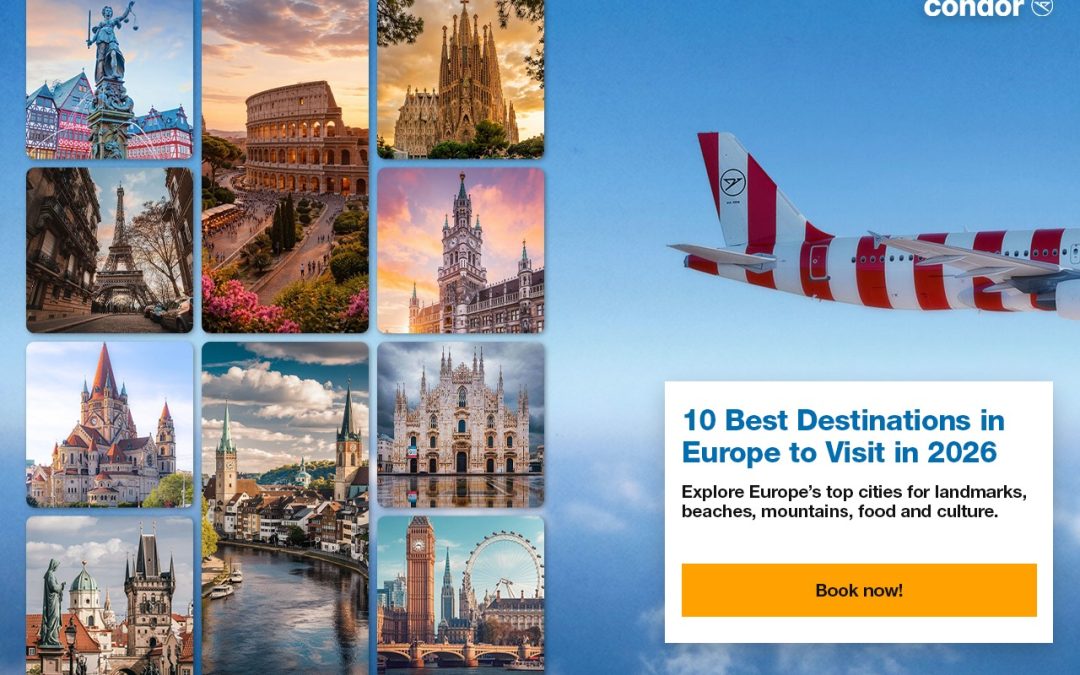
Planning a Europe trip sounds exciting — until you actually sit down and try to choose where to go. Beautiful cities, historic landmarks, stunning beaches, majestic mountains, incredible food, cultures that feel worlds apart from each other — that’s exactly what makes narrowing down the best destinations in Europe so difficult. Travelers coming from the USA at least have it a bit easier, since major European cities tend to offer numerous flight options, so you can tailor a trip around what actually interests you instead of settling for what’s convenient. From classic favorites to cities that reward a slower pace, here are 10 destinations worth considering for travel in Europe in 2026. Before you start planning, take a look at flights from the USA to Europe.
Top 10 Places to Visit in Europe in 2026
From iconic landmarks and historic streets to beaches, mountains, food, and culture, Europe really does have something for every kind of traveler. Here are 10 cities worth adding to your 2026 travel list.
Frankfurt, Germany — A Gateway to Europe
Frankfurt gets pegged as a business-district city, but there’s more going on here than skyscrapers suggest. Walk around Römerberg, poke through the Old Town, check out the museums lining the Main River, and try some traditional German food while you’re at it. Its central location is also genuinely useful if you’re hoping to hit more than one European city on the same trip. For travelers arriving from the USA, comparing flights to Frankfurt can be a smart way to start a European itinerary.
Paris, France — The Classic European Escape
Some cities simply never get old, and Paris is one of them. You can spend the morning admiring the Eiffel Tower, wander through the Louvre, and finish the day beside the Seine. Leave room for small cafés, fresh pastries, and neighborhood walks because some of the best Paris moments happen away from the major attractions. For couples, families, and first-time visitors, Paris easily earns its place among the best destinations in Europe.
Rome, Italy — History and delicious Food
Rome is one of the places where you can turn a corner and suddenly find yourself standing beside something centuries old. Explore the Colosseum and Roman Forum, visit Vatican City, and make a stop at the Trevi Fountain. And, of course, leave plenty of time for pizza, pasta, gelato, and neighborhood restaurants. Rome is a particularly good match for history and food lovers. Give yourself several days here rather than trying to see everything in one rushed weekend. It remains one of the best destinations in Europe for travelers who like their vacations packed with stories and flavor.
Barcelona, Spain — City Life Meets the Beach
Barcelona gives you a little bit of everything. You can spend the morning looking at Gaudí’s incredible architecture, including the Sagrada Família, and be sitting on Barceloneta Beach later in the day. Add tapas, local markets, late dinners, and a lively nightlife scene, and you have a city that is hard to get bored in. It is easy to see why Barcelona is considered one of the best vacation destinations in Europe, especially for travelers who want both city energy and a Mediterranean escape.
Munich, Germany — Bavarian Culture and Scenery
Munich is a great choice if you want to experience traditional German culture without giving up access to the outdoors. Start around Marienplatz and the historic center, then settle down for Bavarian food at a local restaurant or beer garden. If you visit during Oktoberfest, the city takes on an entirely different energy. Beyond Munich itself, castles, lakes, and scenic countryside are within reach, giving you plenty of options for day trips.
Vienna, Austria — Culture and Elegance
Vienna has a slower, more graceful feel that makes it perfect for travelers who don’t want every day to feel rushed. Visit Schönbrunn Palace, explore its grand historic buildings, and spend some time in the city’s museums. Music lovers can also enjoy Vienna’s strong classical tradition. And then there are the coffeehouses, where sitting down with a coffee and cake can easily become an afternoon activity. It is one of the best destinations in Europe for a relaxed European city break.
Milan, Italy — Fashion, Food and Design
Milan is a natural fit for travelers who enjoy fashion, design, art, and food. Start with the impressive Milan Cathedral, then explore the city’s fashion district and shops. When you’re ready for a break, find an Italian restaurant or settle in for an aperitivo. Milan is also convenient for a shorter trip because many of its major attractions can be covered without spending a week in the city. For that reason, it remains one of the best destinations in Europe for a quick European getaway.
Zurich, Switzerland — City and Alpine Adventures
Zurich is a good reminder that a European trip doesn’t have to be only about museums and city streets. Explore the Old Town, walk along Lake Zurich, and try some Swiss chocolate before heading into the surrounding mountains. Scenic train journeys are another highlight and can turn transportation into part of the experience. That mix of city comforts and spectacular scenery makes Zurich one of the best destinations in Europe for couples, families, and travelers who love the outdoors.
Prague, Czech Republic — A Fairytale City Break
Prague has the kind of setting that makes even an ordinary walk feel special. Visit Prague Castle, cross Charles Bridge, and spend time around Old Town Square. Between the historic buildings, you’ll find plenty of small cafés and places to stop for a drink or meal. The city is especially appealing if you want somewhere that feels distinctive without needing a packed schedule. It is also one of the best vacation destinations in Europe for travelers looking for a memorable city break.
London, UK — Something for Everyone
London is one of those destinations where everyone in a group can usually find something they enjoy. You can see Big Ben, Tower Bridge, and Buckingham Palace, then spend an afternoon in a museum or gallery. Add shopping, theater, entertainment, and a huge range of international food, and you have enough options to fill several trips. That variety is exactly why London continues to be one of the best places to visit in Europe.
Tips for Planning Europe Travel From the USA
Traveling from the USA to Europe takes some planning, but a little preparation can make the journey much easier. A few things worth keeping in mind before you book:
Book flights early — lock in your tickets ahead of time, especially for popular summer travel dates.
Compare routes — check different airports, flight times, and connections before you commit.
Check entry rules — make sure your passport and travel documents meet current requirements.
Keep your itinerary realistic — don’t try to pack too many cities into a short trip.
Plan for jet lag — give yourself time to rest and adjust once you land in Europe.
Check baggage rules — review baggage allowances and travel insurance before you head out.
Compare flight options — when searching for Europe flights from the USA, don’t just look at the price; weigh flight times, connections, and baggage allowances too.
Final words
There’s no single perfect European destination — there just isn’t. The best destinations in Europe really come down to what you’re after: history in Rome, beaches in Barcelona, mountains around Zurich, or food and culture in Paris. Rather than rushing through a long checklist, consider picking one or two cities and giving yourself real time to experience them properly. These European vacation destinations tend to deliver a much better trip when you leave room for spontaneous walks, local meals, and the kind of discoveries you can’t plan for. When you’re ready to start putting it together, plan your trip to Europe.
Europe has always been more than its postcard landmarks. You’ll still find the Eiffel Tower, the Colosseum, and canals full of gondolas, but there’s also wild coastline, snow-capped mountains, and food worth the trip on its own. There are countless things to do in Europe that mix sightseeing with real, hands-on experiences.
2026 is a great year to explore, with more flexible travel options and easier ways to book local activities on the go. Many travelers now combine classic sightseeing with guided tours, so they see more without planning every detail themselves. Whether you’re after history, nature, beaches, or food, you’ll find no shortage of things to do in Europe to fill an itinerary. For a mix of guided options in one place,Europe tours and experiences are worth browsing before you lock in your route.
Top 10 things to do in Europe
If you are planning a trip to Europe and you are confused about where to start your trip, here are the top 10 things to do in Europe
See the Eiffel Tower and Explore Paris
Paris is the obvious starting point, and for good reason. Head up the Eiffel Tower for panoramic views, then take a relaxed Seine River cruise. The Louvre and the artsy streets of Montmartre are both worth an afternoon. If you’d rather skip the logistics, a guided walking tour is an easy way to cover the highlights. Paris remains one of the top places to visit in Europe, no matter how many times you’ve been.
Step Back in Time in Rome
Rome turns every walk into a history lesson. The Colosseum and Roman Forum bring ancient history to life, while the Pantheon and Trevi Fountain suit slower afternoons. Vatican City and St. Peter’s Basilica deserve a half-day on their own. Between stops, grab real Italian food — not the tourist-menu kind. Rome is ideal for lovers of history and culture, and its ruins remain some of the most visited Europe attractions on the continent.
Explore the Swiss Alps
For dramatic scenery, nothing beats the Swiss Alps. Base yourself in Interlaken, Lucerne, or Zermatt for easy access to hiking trails, cable cars, and scenic train rides. Excursions here range from easy to adventurous, so there’s something for every fitness level. It’s one of the best European experiences for anyone who’d rather trade city noise for fresh air. If you want the logistics handled,Swiss Alps tours and excursions make it simple to book guided hikes without the guesswork.
4. Discover Barcelona’s Architecture and Beaches
Barcelona somehow does it all — art, architecture, food, and beaches. Sagrada Família and Park Güell showcase Gaudí’s strange, beautiful style, while the Gothic Quarter feels like another century. Walk La Rambla, cool off at the beach, then finish with tapas and local Catalan dishes. It’s one of the more well-rounded things to do in Europe for travelers who want it all.
Go Island-Hopping in Greece
Greece is built for slow, sun-soaked travel. Santorini, Mykonos, Crete, and Rhodes each have their own personality, and an island-hopping excursion is one of the easiest ways to see several in one visit. Expect whitewashed villages, fresh seafood, and unforgettable sunsets — ideally in shoulder season, for smaller crowds. For beach lovers, Greece is consistently near the top of any list of best things to do in Europe.
Experience London’s History and Culture
London blends royal history with modern city energy. Buckingham Palace, Tower Bridge, and the Tower of London are must-sees, but the museums and lesser-known neighborhoods are just as rewarding. A Thames River cruise offers a different angle on the skyline, and the markets and food scene could fill a few days alone. London’s transport links also make it a convenient base for wider Europe tours.
Take a Gondola Ride Through Venice
Venice lives up to the hype. A traditional gondola ride through the canals is worth doing once, and St. Mark’s Square and the Doge’s Palace are essential stops. The real charm, though, is in the quieter neighborhoods away from the busiest tourist areas — visit early morning for a calmer feel. Venice is a natural pick for couples and first-time visitors, and it’s consistently ranked among the more romantic things to do in Europe.
See the Northern Lights in Scandinavia
For something totally different, head north. Norway, Finland, Sweden, and Iceland all offer solid chances to catch the Northern Lights, generally best from late autumn through early spring. Pair it with winter activities like dog sledding for a full Arctic experience — sightings depend on clear skies and solar activity. This is one of the most memorable things to do in Europe in 2026 for anyone chasing a bucket-list moment.
Enjoy European Food and Wine
Food might be the most underrated reason to travel through Europe. Italy, Portugal, France, and Spain each bring their own specialties, and getting off the main tourist strip — into local markets and family-run vineyards — makes a real difference. Trying regional dishes instead of familiar favorites adds a cultural layer sightseeing alone can’t. Booking food and wine tours in Europe is an easy way to taste like a local.
Take a European Road Trip
A road trip gives you flexibility that city-hopping can’t match. Consider routes through France, Italy, Spain, Portugal, Austria, or the Balkans, stopping at small towns, castles, and viewpoints you’d otherwise drive past. Double-check tolls, parking rules, and rental requirements before you go. Road trips are one of the best ways to reach Europe attractions off the typical tourist map, and they’re a favorite among people planning things to do in Europe at their own pace.
How to Choose the Best Things to Do in Europe
Not sure where to start? Match your trip to what you want:
History: Rome, Paris, London
Nature: Swiss Alps, Scandinavia
Beaches: Greece, Barcelona
Romance: Venice, Paris
Food: Italy, Portugal, France
Adventure: Alps, Northern Lights, road trips
First European trip: Paris, Rome, London, Barcelona
This quick guide makes it easier to narrow down places to visit in Europe based on your interests instead of just picking the most photographed cities.
Tips for Planning a Europe Trip in 2026
Here are some travel tips that make your trip easy
Book popular attractions and tours early, especially during busy seasons.
Compare trains, buses, flights, and other transport options before you decide.
Check the latest visa and entry requirements before you travel.
Consider visiting during the shoulder season if you want fewer crowds and a more relaxed experience.
Don’t pack too much into your itinerary—leave some free time to explore at your own pace.
Final thoughts
From iconic places to quiet mountain trails, there’s no shortage of things to do in Europe in 2026. The best trips mix a few famous sights with local tours and activities that give you a feel for how people actually live there. You can choose your destinations based on your interests, budget, and season. Travel guides and tours can take the planning stress off your plate while adding local insight. Ready to explore some of the best European experiences out there? BrowseEurope experiences and activities and start building your 2026 Europe itinerary today.
Running a travel business in 2026 is exciting, but let’s be honest, it’s also brutally competitive. A traveler can compare destinations, prices, hotels, and agency reviews in the time it takes to finish a coffee. If your business isn’t easy to find online, chances are you’re losing customers before they’ve even picked up the phone.
That’s exactly why travel agency marketing matters so much right now. A solid online strategy helps you reach the right people, earn their trust, and turn casual browsers into confirmed bookings. And no, you don’t need to be on every single channel at once; you just need to pick the strategies that fit your audience and actually stick with them. For email marketing and customer communication, travel businesses can also use Brevo to manage campaigns and stay connected with potential customers.
Build a Strong Online Presence for Better Travel Agency Marketing
For most people, your website is the very first impression of your agency. It needs to be clean, mobile-friendly, and simple enough that someone can find what they need without hunting for it.
Make sure visitors can quickly find:
Travel packages and destinations
Pricing details
Contact information
Customer reviews
Clear CTAs like “Book Now,” “Get a Quote,” or “Contact Us”
The fewer clicks between interest and inquiry, the better. At its core, good travel agency marketing is about removing friction. If a visitor can’t quickly understand what you offer, they’ll bounce to a competitor’s site instead. It also helps to build your pages around the destination and travel keywords people are actually searching for. If this feels like a lot to manage on your own, a travel digital marketing agency can step in to handle the website, SEO, and content side of things.
Use SEO for Effective Travel Agency Digital Marketing
Search engines quietly bring in some of the best leads a travel business can get if you show up in the results. Think about what someone types before they book:
“Best family holidays”
“Europe vacation packages”
“Best honeymoon destinations”
“Travel agency near me”
Build dedicated pages for your top destinations and services, and write guides that genuinely answer the questions travelers are asking. That’s what pulls in people who are already halfway to booking.
The strongest travel agency digital marketing strategies don’t just push packages; they help people plan, which naturally builds trust along the way.
Make Social Media Part of Your Travel Marketing Strategy
Travel and social media are a natural pair. Stunning beaches, cozy hotel rooms, street food, sunset views- this is the kind of content Instagram, TikTok, and YouTube were basically made for.
Post short destination clips, quick travel tips, real customer stories, packing hacks, and the occasional behind-the-scenes look at how your agency operates. You can absolutely mention your packages too, just don’t let every single post feel like a sales pitch.
The real goal is relationships, not vanity metrics. Reply to comments, answer DMs, and encourage past travelers to tag you in their trip photos. That kind of user-generated content tends to carry more weight than any ad you could run, simply because it’s real.
Use Email Marketing With a Digital Marketing Agency for Travel
Not everyone who lands on your site is ready to book that day. Some are comparing prices, some are waiting for a sale, some are just dreaming about next year’s trip. Email is how you stay on their radar without being pushy about it.
Send destination ideas, seasonal deals, travel tips, and new package announcements. A tool likeBrevo makes this a lot more manageable, letting you organize campaigns and customer communication in one place.
Here’s where it gets smart: if someone previously showed interest in a European getaway, send them more European ideas — not a generic blast about every destination you sell. That kind of personal touch is what makes travel agency marketing feel relevant instead of spammy.
Create Helpful Content for Digital Marketing for Travel Agency Businesses
A blog can quietly become one of your best lead sources — as long as it’s not just a wall of sales pitches. Focus on the questions travelers are already typing into Google:
Best destinations to visit in 2026
Budget-friendly vacation ideas
Family travel tips
Packing checklists
Best honeymoon destinations
Destination comparisons
Visa and travel planning tips
When your content is genuinely useful, your agency starts to look like a trusted source rather than just another seller. And trust, over time, tends to turn into bookings. This is really the heart of digital marketing for travel agency businesses, pairing helpful content with your promotional efforts, not replacing one with the other.
Use Paid Ads With a Digital Marketing Agency for Travel
Use Google, Facebook, and Instagram Ads to reach potential travelers quickly.
Target people based on their location, interests, and search behavior.
Focus your ads on specific destinations or travel packages.
Start with a small budget and check which ads bring real inquiries.
Don’t spend money without tracking results.
A digital marketing agency for travel can help create ads, test different messages, and improve targeting.
A focused campaign can often perform better than promoting many different packages at once.
Build Trust With Customer Reviews
Ask happy customers to leave honest reviews on Google and other relevant platforms.
Add positive testimonials to your website.
Share real customer experiences and travel photos on social media.
Use reviews to show potential customers that your business is reliable.
Don’t ignore negative reviews.
Respond politely, acknowledge the problem, and explain how you’re handling it.
Genuine reviews can help new customers feel more confident about booking with you.
Choose the Right Travel Marketing Agencies
Juggling SEO, social, email, ads, and content is a lot for a small team. This is where travel marketing agencies come in. Skip flashy promises and ask the real questions:
Do they understand the travel industry specifically?
How do they measure success?
Can they show actual past results?
A good travel digital marketing agency explains its strategy clearly — not guaranteed bookings or instant rankings, because no one can honestly promise that.
Personalize Your Travel Agency Marketing
A family booking a summer trip wants something completely different from a couple planning a honeymoon or a solo traveler chasing adventure. Treating them all the same in your marketing is a missed opportunity.
Split your audience into simple groups and tailor your messaging accordingly: family packages for families, luxury escapes for premium travelers, budget deals for the price-conscious. Tools likeBrevo make it easier to organize these segments and send offers that actually match what each group is looking for.
Keep Customers Coming Back With Travel Agency Digital Marketing
Landing a new customer is great, but keeping existing ones is often more valuable, and cheaper. Once someone’s back from their trip, send a thank-you, ask for a review, and occasionally share destination ideas. When they plan their next holiday, your agency is already familiar. Brevo works well for follow-up and newsletter outreach.
FAQs: Travel Agency Marketing
What is travel agency marketing? It includes SEO, social media, email, content, and paid advertising to attract and convert travelers.
How can a travel agency get more customers? Use SEO, social media, customer reviews, personalized offers, and targeted online advertising.
Why is digital marketing important for travel agencies? It helps travel agencies reach travelers who are already searching and planning trips online.
How can travel agencies get more bookings? Make booking simple, respond quickly, build trust with reviews, and promote relevant travel packages.
Should a travel agency use email marketing? Yes, email marketing helps agencies stay connected with potential and previous customers and encourage repeat bookings.
Final Thoughts on Travel Agency Marketing in 2026
Winning customers in 2026 isn’t about being everywhere; it’s about showing up where travelers are looking, with something genuinely useful to offer. A thoughtful mix of SEO, social media, helpful content, email, reviews, and targeted ads builds a solid foundation, even for a small agency. If customer communication needs tightening up,Brevo is a solid tool to fold into your marketing approach.
When it comes to island escapes, the United States and the United Kingdom offer some of the most stunning and diverse destinations. From the tropical paradises of Hawaii to the rugged beauty of the Scottish Isles, these islands offer unique experiences for every kind of traveler. Whether you’re seeking sun-soaked beaches, historical sites, or tranquil countryside, there’s an island waiting to be discovered. Let’s explore some of the best islands in the US and UK to help you find your perfect getaway.
Maui, Hawaii: The Island of Sun and Surf
Maui, often referred to as the “Valley Isle,” is a top destination for those looking to experience the natural beauty of Hawaii. The island offers everything from world-famous beaches like Ka’anapali to the lush rainforests of Hana. For adventure seekers, hiking through the Haleakalā National Park or driving the scenic Road to Hana are must-do activities. Maui is also a fantastic spot for surfing, snorkeling, and whale watching, making it a versatile destination for all kinds of travelers.
Isle of Skye, Scotland: A Landscape of Legends
The Isle of Skye, located off the west coast of Scotland, is known for its rugged landscapes, picturesque villages, and rich history. Visitors can explore the iconic Old Man of Storr, the Quiraing landslip, and the fairy-tale-like Fairy Pools. Skye’s mystical landscapes have inspired countless legends and myths, making it an ideal destination for those who love both natural beauty and folklore. The island’s dramatic scenery is perfect for hiking, photography, and immersing yourself in the rich Scottish culture.
Nantucket, Massachusetts: A Quintessential New England Escape
Nantucket, located off the coast of Cape Cod, is a charming island with a rich maritime history. The island’s cobblestone streets, historic lighthouses, and shingled cottages create a timeless atmosphere that attracts visitors year-round. Nantucket is known for its beautiful beaches, particularly Surfside Beach and Madaket Beach, which offer stunning ocean views. The island also hosts several cultural events and festivals, making it a vibrant destination for art lovers and history buffs alike.
Isle of Wight, England: A Coastal Retreat
The Isle of Wight, located just off the south coast of England, is a popular destination for those seeking a traditional seaside holiday. With its sandy beaches, rolling hills, and charming villages, the Isle of Wight offers a peaceful retreat from the hustle and bustle of city life. The island is also home to several historic sites, including Osborne House, the former summer home of Queen Victoria. Whether you’re exploring the scenic coastal paths, visiting the Needles, or enjoying the local seafood, the Isle of Wight offers a quintessential British getaway.
San Juan Islands, Washington: A Pacific Northwest Paradise
The San Juan Islands, located in the Salish Sea between Washington State and Canada, are known for their pristine natural beauty and abundant wildlife. Orcas Island, the largest in the archipelago, is a haven for outdoor enthusiasts, offering opportunities for kayaking, hiking, and whale watching. The islands’ small towns, such as Friday Harbor on San Juan Island, offer charming boutiques, art galleries, and farm-to-table dining experiences. The San Juan Islands are perfect for those looking to reconnect with nature and enjoy a slower pace of life.
Guernsey, Channel Islands: A Blend of British and French Culture
Guernsey, one of the Channel Islands, is a unique destination that blends British and French influences. The island is known for its stunning coastline, historic forts, and charming harbor towns. Guernsey offers a mix of outdoor activities, from hiking the coastal cliffs to exploring hidden coves and beaches. The island’s capital, St. Peter Port, is a picturesque town with narrow cobbled streets, boutique shops, and delightful cafes. With its mild climate and rich history, Guernsey is an ideal destination for a relaxing and culturally enriching holiday.
Key West, Florida: The Southernmost Island Escape
Key West, the southernmost point of the continental United States, is famous for its laid-back atmosphere, vibrant nightlife, and colorful history. The island’s historic Old Town is home to the Ernest Hemingway Home and Museum, as well as the lively Duval Street, lined with bars, restaurants, and shops. Key West’s turquoise waters are perfect for snorkeling, diving, and sailing, while the island’s sunsets are legendary, often celebrated with a sunset sail or a visit to Mallory Square. Key West is a lively and diverse destination that offers something for everyone.
Isle of Man: A Journey Through Time
The Isle of Man, located in the Irish Sea between England and Ireland, is a hidden gem that offers a mix of natural beauty, history, and culture. The island is known for its rugged coastline, ancient castles, and the TT motorcycle races, one of the most famous motorsport events in the world. Visitors can explore the island’s heritage sites, such as the medieval Castle Rushen and the ancient Laxey Wheel, or hike the coastal paths for breathtaking views. The Isle of Man is perfect for those seeking an off-the-beaten-path adventure with a touch of history.
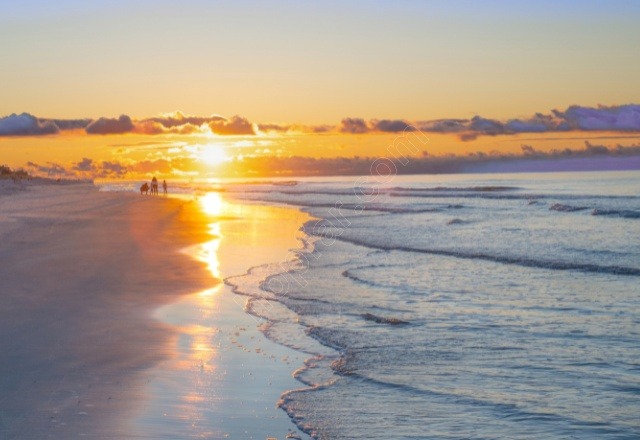
Hilton Head, South Carolina: A Golfers’ Paradise
Hilton Head Island, located off the coast of South Carolina, is renowned for its world-class golf courses, beautiful beaches, and luxury resorts. The island’s natural beauty, combined with its upscale amenities, makes it a popular destination for both relaxation and recreation. Visitors can enjoy biking along the island’s extensive trails, exploring the local wildlife, or indulging in gourmet dining. Hilton Head’s family-friendly atmosphere and abundant outdoor activities make it a great choice for a relaxing and fun-filled getaway.
Orkney Islands, Scotland: Where History Meets Nature
The Orkney Islands, located off the northeastern coast of Scotland, are a group of islands rich in history and natural beauty. The islands are home to some of the best-preserved Neolithic sites in Europe, including the famous Skara Brae and the Ring of Brodgar. The Orkneys also offer stunning coastal scenery, with dramatic cliffs, sandy beaches, and abundant wildlife. The islands’ unique blend of history, culture, and natural beauty makes them an intriguing destination for those seeking to explore a lesser-known part of the UK.
Conclusion
Whether you’re looking for a tropical paradise, a rugged adventure, or a peaceful retreat, the islands of the US and UK offer a diverse range of experiences. From the sunny shores of Hawaii to the mystical landscapes of the Scottish Isles, each island has its own unique charm and attractions. So, pack your bags and set out to discover the perfect island getaway that awaits you!