by pankaj | Oct 13, 2022 | Vacations & Leisure
Thailand and Vietnam are both exceptional nations. Explore the real Vietnam on two wheels by venturing outside the popular tourist areas and mingling with the populace. Thailand, also known as the “Land of Smiles,” is regarded as one of the best places in the world for motorcycle touring. The nation is a true motorbike paradise thanks to its fishing villages, jungles, elephants, monkeys at the side of the road, and breathtaking natural beauty.
Here are the top road excursions in Vietnam and Thailand that every motorcycle enthusiast should take if you plan a motorcycle journey in this region of the world.
- Saigon – Dalat – Nha Trang, Vietnam
On a network of picturesque coastal roads, this backroad leads riders past beaches and mountains so they can experience the real Vietnam. Above 1,500 ft (450 m) from the sea level at the Dai Ninh and Prenn passes, the drive from Saigon to Dalat will take you through mangrove forests and past magnificent beaches.
The road from Dalat to Nha Trang takes riders by farmlands, mountain scenery, rolling hills, and passing through the Long Lanh Pass before reaching Nha Trang.
- Best time: all year
- Distance: around 370 miles (600 km)
- Days Required: at least four days
- Ha Giang – “The Road of Happiness,” Vietnam
The “Road of Happiness” is the more popular name for highway 4C in the northern province of Ha Giang. However, if you dare explore beyond the popular tourist attractions, you will find hundreds of hairpin curves. This route, which hangs precariously over cliffs close to the Yunnan province of China, is not for the timid.
You can go from Ha Giang to the Dong Van karst plateau geopark by way of a road that passes numerous hill tribes, tall limestone walls, and rice terraces. However, the stretch of road between Dong Van and Meo Vac, which is thought to be the most picturesque in all of Vietnam, is the excursion’s high point. In this segment, you will pass via the Ma Pi Lang Pass, which offers several breathtaking vistas.
- Best time: June and July and September to November
- Distance: around 200 miles (330 km)
- Days Required: at least three days
- The Chiang Rai Loop, Thailand
The Chiang Rai Loop is a network of winding roads north of Chiang Mai in northern Thailand. The Mae Sa Elephant Camp is where you may see the elephants and observe them doing their “daily chores,” which include bathing, painting, and even playing football.
As you travel from Mae Sa to Tha Ton, a picturesque vista of the lush countryside will unfold before your eyes. The impressive Wat Tha Ton temple welcomes guests with breathtaking panoramic views of the beautiful countryside. Make time to see the settlement of the long-necked Karen tribe while you’re here.
You can visit mountain tea farmers in Doi Mae Salong, which is accessible via the road. When you arrive in the Golden Triangle, where the borders of Myanmar, Laos, and Thailand meet, you will have traveled as far north as Mae Sai, Thailand. Since no visa is needed, you are free to board a long-tail boat and travel to Laos.
- Best time: October to April
- Distance: around 350 miles (570 km)
- Days Required: at least four days
- The Mae Hong Son Loop, Thailand
You will travel by the Doi Inthanon National Park on your way to Mae Sariang, where you can take a diversion and ride to the top of the Doi Inthanon Mountain, Thailand’s highest peak and a part of the Himalayan mountain chain. You can stop along the way to Pai to explore caverns or participate in one of the numerous thrilling outdoor sports, like white water rafting.
It is preferable to complete the Mae Hong Son Loop in a clockwise direction if this is your first time riding in Thailand. You can take on one of the numerous breathtaking hikes close to Mae Sariang if you stay here for an additional day or two.
- Best time: October to April
- Distance: 420 miles (670 km)
- Days Required: allow at least five days
by pankaj | Oct 12, 2022 | Vacations & Leisure
It is unnecessary to do what everyone else does on New Year’s Eve. You can travel far away and discover a new country instead spending hours finding the ideal New Year’s Eve dress or paying outrageous prices for tickets to a famous club. Choosing where to spend New Year’s Eve is the challenging part, though. Check out the list of fantastic destinations we’ve selected for you.
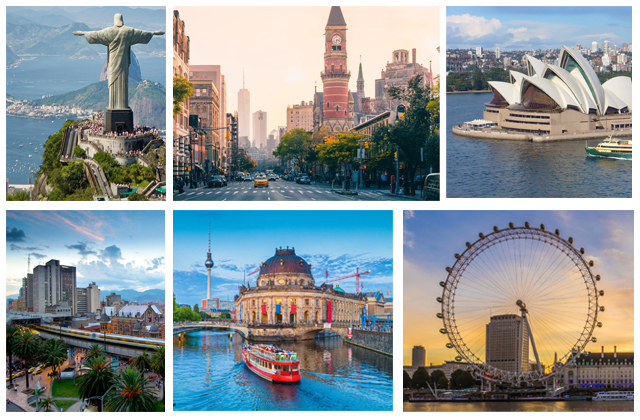
- Rio de Janeiro
Rio de Janeiro has the largest carnival in the world each year. Brazilians can create a fantastic party, and dance like no one is looking! The atmosphere at Copacabana Beach is electrifying because there are over 2 million visitors there each year.
A couple of Brazil’s traditions are enjoyable to participate in as well. For example, for New Year’s Eve, most people in Brazil wear white, following a custom derived from an African ritual and signifying peace.
It’s also believed that you should go to the beach right after midnight and make seven wishes while jumping off seven waves.
- London
The spectacular fireworks show over the Thames in London seems to become better and better every year. Joining a boat party on the River Thames is one of the best ways to enjoy the New Year in London. You’ll have a front-row view of the fireworks this way.
There are parties in London for every type of individual, including ones with a prohibition-era theme from the 1940s, ones with a circus theme, ones with an Alcotraz cocktail experience, and many more fun ideas.
- Berlin
The nightlife in Berlin is well-known throughout the world. Some of the world’s most exclusive and mysterious clubs are located there. Many people have a “nightclub bucket list, ” including places like KitKatClub and Berghein.
These locations are among the greatest for New Year’s Eve celebrations and Berlin’s 4,500 clubs and pubs. In addition, you may listen to every genre of music in Berlin, including techno, house, pop, and R&B.
One of the world’s largest New Year’s Eve open-air festivities is held near the Brandenburg Gate if you prefer some fresh air. Berlin is a fantastic city with odd neighborhoods, a rich past, and lots of beer gardens.
- Medellin
In Medellin, Colombia, celebrations are held every single day. Reggaeton music and dancing never end! On New Year’s Eve, it elevates its already vibrant nightlife to a new level.
The amazing events aren’t just limited to December 31. These festivities extend for a few days after New Year’s Eve.
When the clock strikes twelve, travel to one of Medelln’s rooftop bars for a more laid-back atmosphere and watch the sky light up with fireworks.
- Sydney
Sydney might be an excellent choice if flying to a remote island in the middle of the ocean sounds a little too challenging for you. It is the first big city to celebrate the New Year on the entire planet.
More than a million people travel to Sydney every year to see the spectacular fireworks display over Sydney Harbor. Watch as famous structures like the Sydney Opera House and Sydney Harbour Bridge reflect the lights. You can recover from a hangover on one of Sydney’s renowned beaches with golden sand.
- New York City
New York is a must-visit city if you are planning to travel. Eyes from all over the world shift to Times Square and the iconic Ball Drop as the hour approaches midnight. Take in the enthusiasm and eagerness of the many eager people to bid farewell to the old and hello to the new. The unity in these few minutes is beyond words!

by pankaj | Oct 10, 2022 | Travel Tips
How will you approach your upcoming trip if you are a solo traveler? If you are wondering where you should go and what you should do, then here you will get all your answers. The tips described in this article will assist you in deciding your travel destination. Most of these suggestions take a few minutes and can save you money, hassle, and confusion. But are you prepared to create the ultimate solo trip? So, let’s get started!
Tips to Make your First Solo Trip Memorable
Below we have outlined some tips to make your first solo trip memorable:
- Plan everything
While organizing your solo trip, having a plan is crucial. There is no set order according to which you must complete tasks, although the following are some suggestions:
- Make hotel reservations.
- Plan a few tours with local operators.
- Plan your airport pickup if you’re flying in.
- Conduct thorough research on the city and its surroundings, considering things like cultural customs, well-known tourist attractions, common routes, food preferences, mobile networks, regional cuisines, etc.
- Prepare a budget accordingly.
Another factor to consider while planning a solo trip is the expense of your trip. Therefore, your choices regarding travel and accommodation are the most crucial.
Get a clear idea of travel and accommodation expenses before settling on a budget for your solo vacation. First, you must determine the cost of using taxis, public transit, etc. The biggest expense for a solo traveler is accommodation, which might account for 50% to 80% of the overall price. The general idea is to guarantee safety while keeping your accommodation prices as low as possible.
- Set clear goals
When planning for your first solo trip, you easily feel overwhelmed. You’re trying to get around a new city and determine how to make the most of your stay. So why not begin with some intention setting, keeping this in mind?
Consider your trip an opportunity to get to know yourself better; perhaps you want to see how well you can manage on your own while traveling. Or perhaps you want to push yourself or build your confidence. Finally, maybe you want to know what it’s like to move somewhere new, meet new people, and start again. So, if you’ve thought out the objectives for your trip, you’ll find it easier to make the most out of it.
- Pack light. Pack necessary.
Pack accessories and toiletries in small sizes. As much as possible, avoid bringing valuables to save yourself time from worrying about the security of your suitcase. Pepper spray should always be carried in case of emergency. Carry a diary to document your trips, but more importantly, keep a good book nearby to distract your attention from the awkwardness of eating alone.
Conclusion
You’re now prepared to make that solo journey a reality. Taking action is the best way to get through those emotions. You can achieve this by making thorough preparations in advance, selecting the appropriate venue, and gathering all the necessary information about your destination.
by pankaj | Oct 7, 2022 | Travel Tips
If you travel often, you have most likely experienced the nightmare of missing luggage during your travels. In today’s time, flying is pretty messy, and it may include the problem of lost luggage. The longer it takes for your luggage to arrive, the more nervous you get. Unfortunately, losing your luggage is very common, but you can take several measures to prevent this.
- Make sure your bag is tagged properly.
Making sure your luggage is properly tagged is a pretty easy approach to prevent things from going missing. No one can be too careful, so make sure the current tag is easy to see, get rid of any outdated tags, and check the tag once the check-in agent has attached it to your bag.
- Get hi-tech with your tagging.
Locating misplaced luggage becomes much easier with the use of GPS-tracked tags. Although various gadgets are available, most of them typically consist of a small tag or device and a smartphone app allowing you to follow your bags.
In addition to reducing the stress of losing your luggage in the first place, knowing the specific location of your luggage can assist the airline in getting it back to you more quickly.
- Mention clearly where it’s going and who owns it.
Along with an ID badge on your luggage, it’s smart to have some information inside the case, such as your contact information and travel plans. In other words, the more details your luggage has, the simpler it will be to return it to you. Print out your itinerary and place it on top of your clothing to make it simpler for baggage handlers to return your bag to you. Sometimes, baggage handlers will look inside bags to determine where they are going and who the contents belong to.
Your chances of having your luggage arrive late increase if you are the last person to board the aircraft, and they are also the last to be loaded.
Remember that your luggage needs to get to the loading bay once you leave it off at the check-in desk. If you wait till the last minute to pack, your luggage may not arrive at the loading facility in time and may not be loaded.
Most travelers merely want to grab their luggage and leave the airport quickly after a long flight. Unfortunately, a case of mistaken identity can occasionally happen while people are rushing. To make your luggage stand out among the hundreds of others, you could add a few colored straps to distinguish yours from the others. These straps have a dual role in keeping your luggage safe.
by pankaj | Oct 6, 2022 | Vacations & Leisure
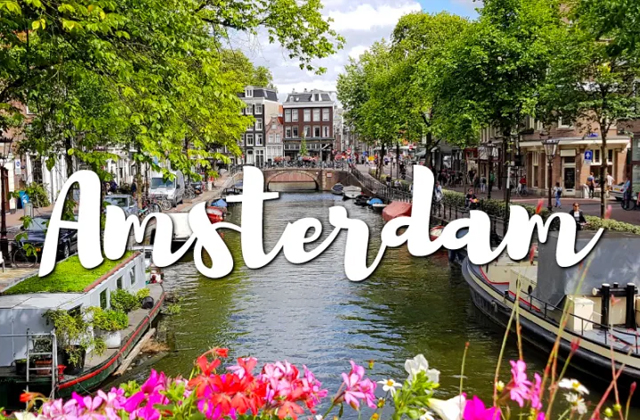
If you want to explore Amsterdam city, there are only basically two transportation options: bike and walking. And fortunately, the Dutch city provides a plethora of gorgeous strolls along verdant canals, past centuries-old churches, and tiny canal houses, as well as along narrow cobblestone alleyways, for those who enjoy walking (and/or biking).
Take a walking tour to get a true sense of the city’s glimpse. They are the ideal option to connect with a knowledgeable local guide who can give their advice and insight while also learning about the history and culture of the area.
Here is a list of the top walking tours in Amsterdam to help you in deciding which ones to take!
- Free Food Tour Amsterdam
During this free two-hour walking tour that highlights Amsterdam’s cuisine, you may test Dutch gouda cheese, deliciously sweet and gooey stroopwafels, deep-fried savory bitterballen, and fresh herring. As you test regional specialties, the knowledgeable local guides provide a nice insight into the history and culture of Dutch cuisine.
- Hungry Birds
This female-owned tour company has been providing hungry tourists with knowledge and food about Amsterdam for almost ten years. For 4.5 hours, “mother birds,” as the locals call their tour guides, take foodies through this lovely Dutch metropolis while they nibble on a variety of delectable Dutch treats. Visitors to the tour have the opportunity to experience street food, typical Dutch fare like herring and stroopwafels, some non-Dutch goodies like Surinamese and Indonesian food, as well as food at an atmospheric old-fashioned food market.
- HistoryWalks
Despite the fact that the country remain neutral during World War II, the Nazis invaded the Netherlands in 1939, just as the conflict was beginning. Their “World War II and the Holocaust in Amsterdam” trip, led by a retired history professor, takes visitors through the city while examining it through the prism of World War II. The three hours are fascinating, and the tour instructors are quite knowledgeable.
- Ultimate Party Amsterdam
These wild pub crawl trips with a party vibe are joyful and entertaining. Join the Red Light District bar crawl, where the first 30 minutes of the tour are free unlimited vodka shots (and then at every stop you get another free shot of booze). Free entry to Amsterdam’s largest nightclub is also included in the tour. This trip is an excellent way to learn about some cool party venues so you can return later and explore more independently. If you’re traveling alone, it’s a fantastic chance to make new friends.
- Eating Europe
Eating Europe, which began in Italy ten years ago, is currently touring many significant European towns, including Amsterdam. The local guides are familiar with where and how to dine! The 3.5-hour walking tour stops at some of the coolest sites in the area, as well as street food and food markets to experience both authentic and inventive Dutch cuisine and some fantastic international cuisine. The experienced tour guides also provide an excellent background in Dutch cooking as well as the tradition and history of feasting in Amsterdam.
Final Words
Amsterdam is a wonderful city with something for every person and every budget. There are many more walking tours for everyone, whether you want to learn about the drug scene and the Red Light District or have more moderate tastes and are curious about the city’s colorful past.