by pankaj | Oct 28, 2026 | Blog
If you’ve ever lost half a morning to the same copy-and-paste chores, you already know why AI is moving into everyday business. The big shift isn’t chatbots that answer questions. It’s agents that do the work while you get on with your day. So CREAO AI is the idea of a platform to build and run agents for your repetitive workflows. It connects to your tools, runs on a schedule, and remembers the way you like things done. Let’s break down how it works.
What Is CREAO AI?
It’s a platform for AI business automation without the coding. You describe a task in plain language, and you set up an agent to handle it. So how is that different from a regular chatbot? A chatbot waits for your question, answers once, and moves on. An agent can run on its own, repeat a task every day or week, and work inside your connected apps.
It’s the difference between asking someone for advice and handing them a job. It suits marketers, agencies, freelancers, sales teams, and small businesses- basically anyone buried in tasks that keep coming back around.
Key Features of CREAO AI
Here are the CREAO AI features that matter most for day-to-day work. You can see the full list on the official features page.
You can create custom agents for specific jobs, like writing SEO briefs, replying to quote requests, or putting together reports. CREAO AI agents are built around your tasks, not the other way around.
- Workflow Automation and Scheduled Tasks
Agents can run daily, weekly, or whenever something specific happens. That kind of AI workflow automation takes a lot of manual repetition off your plate.
- Integrations With Business Tools
It connects with Gmail, Slack, Google Sheets, Notion, and Google Calendar. Agents can work inside the processes you already have instead of forcing you into new ones.
- Memory and Personalized Workflows
It can hold on to your preferences, past decisions, and working instructions. That means less repeating yourself and more consistent results from one task to the next.
- AI Content and Media Generation
Beyond text, it covers video generation, image creation, voice and speech, and even browser use.
How to Use CREAO AI for Business Automation
Using CREAO AI for business automation can help individuals and teams work more efficiently by simplifying repetitive tasks, connecting business tools, and freeing up time for more important work.
- Head to the CREAO website and create an account.
- Describe the task you want to automate.
- Configure the agent and connect the tools it needs.
- Set a schedule or trigger for recurring tasks.
- Review the results and adjust the approval settings as needed.
Benefits of Using CREAO AI
Using CREAO AI for business automation can help individuals and teams work more efficiently by simplifying repetitive tasks, connecting business tools, and freeing up time for more important work.
- It saves time on repetitive tasks.
- It keeps automated business workflows consistent.
- You don’t have to repeat instructions for recurring work.
- It automates across the apps you’ve connected.
- Approval controls let you keep a human in the loop for important actions.
- Individuals and small teams can handle more work in the same hours.
CREAO AI Pricing and Plans
There’s a free plan plus paid options. Credits, team size, scheduling, and upload limits can differ between plans, so compare current features and pricing before you choose one. The CREAO AI always has the latest details. With any of the AI productivity tools out there, the best plan is the one that fits your real workload.
Who Should Use CREAO AI?
- Digital marketers and SEO pros: automate a weekly keyword report.
- Agencies and freelancers: draft a client update every Friday.
- Small business owners: reply to quote requests faster.
- Sales and recruitment teams: send follow-ups and log them in Google Sheets.
- E-commerce and operations managers: summarize daily orders and flag problems in Slack.
Is CREAO AI Worth Trying in 2026?
Probably, if you’ve got repetitive work piling up. Its strengths are agents, integrations, scheduling, and memory. But the value depends on what you automate, which tools you need connected, and the usage limits on your plan.
My advice is to start small. Pick one repeatable task and turn it into one of your automated business workflows. If it saves you time, build from there. That’s the easiest way to test AI business automation without overcommitting. Ready to see CREAO AI in action?
FAQs
- What is CREAO AI used for?
It’s used to build and run agents for recurring work. CREAO AI agents can handle things like reports, replies, and scheduled tasks.
- Is it suitable for beginners?
Yes. You describe the task in plain language, so you don’t need technical skills.
- Can it automate repetitive business tasks?
Yes, and that’s the heart of its AI workflow automation.
- Does it offer a free plan?
It does, so you can test it before upgrading.
- What tools can it connect with?
Gmail, Slack, Google Sheets, Notion, and Google Calendar. Check the CREAO AI features page for the current list.
by pankaj | Oct 27, 2026 | Blog
Your domain name is your address on the internet. Whether you’re launching a business, starting a personal blog, or building a side project, it’s often the first thing people see and the thing they’ll remember. Getting it right matters more than most people think.
That’s where Name.com comes in. Name.com is a platform for registering domains and picking up other website essentials in one place, including hosting, professional email, and website-building options. If you’re wondering whether it’s the right fit, this review walks through what it offers and how to get started.
What Is Name.com?
Name.com is an ICANN-accredited domain registrar, which simply means it’s officially authorised to sell and manage domain names. It helps individuals, entrepreneurs and businesses set up an online presence without juggling a bunch of different providers.
Beyond registration, you’ll find domain transfers, renewals, hosting and email solutions under one roof. Think of it as a one-stop shop for getting online. You can see the full lineup on the Name.com official website, which is the best place to check current details before you decide anything.
Key Features and Services Offered by Name.com
- Domain Name Registration
Search for the name you want and see right away whether it’s available. You can pick from popular extensions like .com, .net, and .org, as well as newer ones that might suit your niche. A memorable domain makes your brand easier to find, easier to share, and harder to forget, so it’s worth taking a little time here.
- Website Hosting and Website Builder
There are hosting options for different kinds of sites, and the available solutions vary depending on the plan you choose. If coding isn’t your thing, the website builder lets beginners put a site together without advanced technical skills. That makes it a gentle starting point for first-timers.
- Professional Business Email
An address like hello@yourbusiness.com looks far more trustworthy than a free webmail account. Name.com offers email solutions, including Titan Email and Google Workspace where offered, which can make talking to customers feel more polished. It’s a small touch that builds trust quickly.
- Domain Security and Privacy
Features like domain privacy, domain locking, and SSL certificates help protect both your ownership and your visitors’ connections. That matters, because losing control of a domain or running an unsecured site can hurt your reputation fast. These services are presented on the official website and support pages.
Why Choose Name.com for Your Online Business?
- Everything in one place- domains, hosting, and email, all under one login.
- Lots of extensions- find one that suits your brand.
- Security built in- privacy and domain protection come with eligible registrations.
- Help when you need it- support resources are there if you get stuck.
- Your choice- Pick only what your site and budget need.
Want a look? Pop over to Name.com and browse at your own pace.
How to Register a Domain Name with Name.com
Here are the steps to register your domain name
- Go to the Name.com website.
- Type in the domain you want.
- See if it’s free, and check other extensions too.
- Compare the price and renewal terms.
- Add it to your cart and check out.
- Set up your domain settings, and you’re done.
Quick heads-up: availability, pricing, and conditions can vary, so read the details before you pay.
Tips for Choosing the Right Domain Name
Here are the best steps to choose the right name for your domain
- Keep it short and easy to remember.
- Make sure it fits your business or topic.
- Skip tricky spellings and extra hyphens.
- Pick an extension that suits your site.
- Check social media handles and trademark clashes.
- Look at the renewal price, not just the first-year deal.
Final words
If you like having domains, hosting, email, and security in one place, Name.com is worth a look. It can work well for small businesses, bloggers, developers, and entrepreneurs. Just compare features, pricing, and renewal terms first, so there are no surprises later.
FAQs
- What is Name.com used for?
It’s used for registering domain names, and it also offers website hosting, email, and related services.
- Can I register a domain through Name.com?
Yes. You can search for available domains and register eligible names.
- Does Name.com offer website hosting?
Yes, it has hosting solutions for different website needs, and what’s available depends on the plan you pick.
- Can I create a professional email address with Name.com?
Yes. Domain-based email options are available, including Titan Email and Google Workspace where offered.
- Does Name.com provide domain privacy protection?
Privacy and security features depend on domain eligibility and the applicable service terms, so check the details at checkout.

by pankaj | Oct 27, 2026 | Blog
Look around for a second. There’s a good chance something nearby has a Samsung logo on it: the phone in your hand, the TV in the next room, maybe the fridge humming in the kitchen. Samsung makes a lot of the everyday tech we stop noticing, and it designs much of it to work together. Curious what’s new this year? The Samsung official website is a good place to start, and this guide will help you figure out where to look first.
A Quick Tour of Samsung’s Product Range
The lineup is big, so let’s take it one category at a time.
- Samsung Galaxy Smartphones
Galaxy phones come at a range of price points, so you’re not pushed toward a flagship you don’t need. Across the range, you’ll find good cameras, sharp displays, and solid performance, plus Galaxy AI features on supported models.
My advice is to choose based on how you actually use your phone. Maybe you take a lot of photos, play games, or just need something that gets through a long workday. A longer spec sheet doesn’t always mean a better phone for you, and putting a few Samsung Galaxy smartphones side by side usually makes the choice obvious.
- Tablets, Watches and Earbuds
Galaxy tablets are handy for watching shows, studying, or getting work done on the move. Add a Galaxy Watch and Galaxy Buds, and you have a small family of devices that play nicely together. When compatible products connect, the little things get easier, like picking up where you left off or controlling things right from your wrist.
- Samsung TVs and Home Entertainment
Samsung’s TVs and monitors cover a mix of display technologies and smart features. The best one depends on your space. A huge screen in a tiny room is overwhelming, and a small one in a big living room looks lost. Before you buy, think about your room size and how you watch, whether that’s movie nights, sports or gaming.
- Samsung Home Appliances
Refrigerators, washing machines, air conditioners, and more all sit in this category. Many models focus on energy efficiency, smart connectivity and AI-powered features where available. Smart appliances can link up through an app, so you can check on a cycle without standing next to the machine. Want a look at what’s on offer? Browse the home appliance collection.
What Makes Samsung Stand Out?
A few things tend to set the brand apart:
- A broad portfolio: phones, TVs, wearables and appliances from one brand.
- Modern design: plenty of models for different tastes and budgets.
- Real upgrades: display, camera, and performance improvements across selected products.
- AI-powered features: available on supported devices.
- Connected experiences: compatible Galaxy products and SmartThings can work together.
- Support options: product help and after-sales service when you need it.
How Samsung Fits Into Everyday Life
Tech matters most when it makes your day easier. A Galaxy phone can handle a quick text or a full work session. In the evening, a Samsung TV and compatible audio gear can turn the living room into your own little cinema.
Around the house, smart appliances can take some of the hassle out of laundry, cooling, and food storage. And you don’t have to buy everything at once. Start with one device and build a connected setup at your own pace.
Why Shop on Samsung’s Official Online Store?
Purchasing directly from the supplier has advantages. On the official website, you can:
- View the complete online catalog.
- Compare available models, features, and specifications.
- Examine available deals, qualifying promotions, and available payment methods.
- Examine delivery details, warranty information, and service assistance.
Before making a decision, it’s simple to view everything in one location with information you can rely on to be up to date.
Final Thoughts
Samsung offers plenty of variety, steady innovation,n and an ecosystem that grows with you. Whether you’re eyeing a new Galaxy phone, a TV upgrade or smarter appliances, the best choice comes from matching the product to your own priorities, not just the flashiest feature. Ready to find your match? Head to the Samsung official website for product details and current offers.
FAQs
- What products does Samsung offer?
Samsung makes smartphones, tablets, wearables, TVs, monitors, and home appliances.
- Why do people choose Samsung?
Many like the wide range, modern design, and the way devices connect.
- Which Samsung products support Galaxy AI?
Galaxy AI features are available on supported devices, so check the details for the specific model you’re considering.
- Can I buy smartphones and home appliances online from Samsung?
Yes, you can browse both on the official online store.
- How do I check Samsung’s latest offers?
Visit the official website to see current offers, eligible promotions, and payment options.
by pankaj | Oct 26, 2026 | Blog
Choosing a host is a bit like choosing a business partner. Get it right and everything just works. Get it wrong, and you’re stuck with slow pages, clunky dashboards, and surprise bills. So let’s take an honest look at what Kamatera offers this year. In this Kamatera review 2026, we’ll walk through the features, the pricing approach, and who it actually suits, so you can decide without wading through marketing fluff.
What Is Kamatera? An Introduction to the Brand
Kamatera is a cloud infrastructure and hosting provider that lets you build servers the way you want them, instead of squeezing you into a fixed package. Kamatera cloud hosting is built for a wide mix of people: startups testing a new idea, developers who need a flexible playground, small businesses running websites, and larger enterprises handling heavy workloads.
What makes the brand interesting is its build-it-yourself philosophy. Rather than picking “Plan A” or “Plan B,” you decide how much power you need and pay for that. If you want to see the full platform for yourself, head over to the official Kamatera website.
What Cloud Hosting Services Does Kamatera Offer?
Kamatera hosting services cover a lot more than a single product. Here’s a quick tour of the main ones.
Kamatera Cloud Servers
Kamatera cloud servers are fully customizable. You choose the CPU, RAM, and storage, then use that server for websites, apps, or databases. A simple blog doesn’t need the same setup as a busy online store, and that’s exactly the point. You shape the server around your workload, not the other way around. This is where Kamatera cloud hosting really shows how adaptable it is, especially if your projects vary in size and demand.
Kamatera VPS Hosting
If you want more control, Kamatera VPS hosting gives you a virtual private server with configurable resources. You pick the operating system, set things up your way, and keep full control of your environment. It’s a nice middle ground between basic shared hosting, where you share resources with strangers, and a full dedicated machine, which can be overkill and expensive.
Additional Cloud Solutions
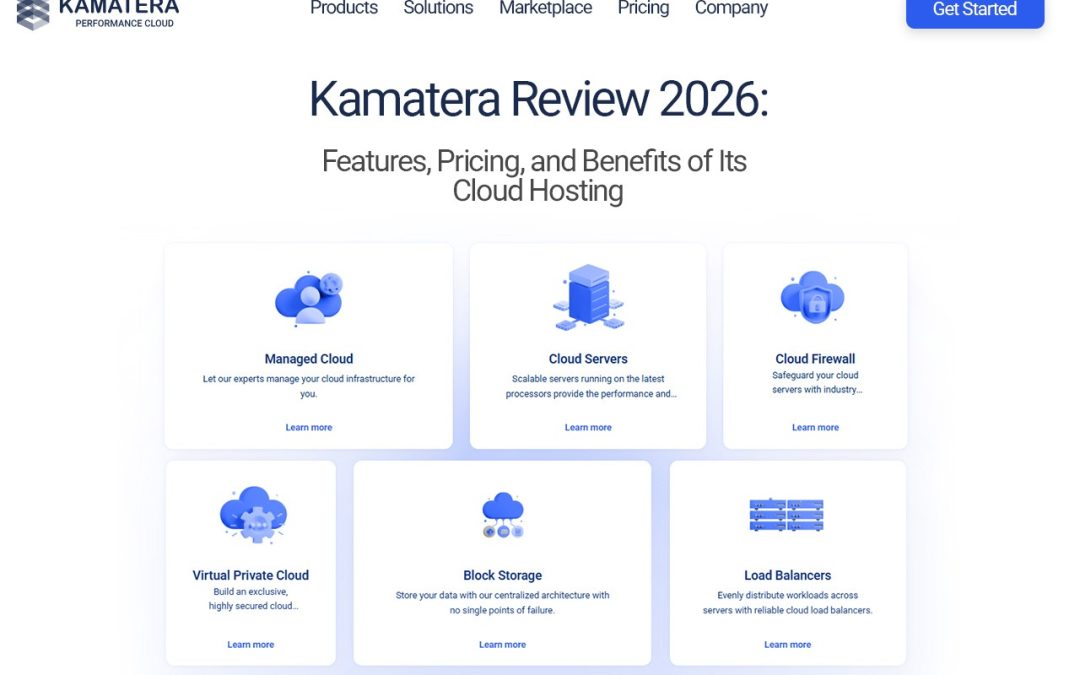
Beyond the basics, there are extras worth knowing about: cloud firewalls, load balancers, block storage, and private networking. Managed cloud services are available too, in case you’d rather hand off some of the day-to-day work. These add-on Kamatera hosting services let your setup grow without forcing you to switch providers or rebuild from scratch.
Key Features and Benefits of Kamatera
Here’s what stands out:
- Flexible server configurations: build exactly what your project needs.
- Scalable resources: adjust up or down as your traffic or business changes.
- Global data center locations: place servers closer to your visitors for faster load times.
- 24/7 technical support: help is there when something breaks at 2 a.m.
- Uptime guarantee and reliable infrastructure: your site stays available, and you can check the exact terms on the official site.
The real benefit of Kamatera cloud hosting comes down to control. You’re not paying for resources you’ll never touch, and you’re not stuck when you outgrow your plan. For a growing business, that kind of room to breathe matters more than a flashy feature list.
Kamatera Pricing: What Should You Know?
Kamatera pricing is built around the resources you choose, which is refreshing if you’ve ever felt boxed in by rigid tiers. You can typically pay hourly or monthly, depending on how you work. Short-term testing? Hourly makes sense, since you only pay while the server runs. Running a live site long term? Monthly is usually the simpler route.
What shapes your bill? Mainly CPU, RAM, storage, and any extra services like backups or load balancers. The more you add, the higher the cost, so it pays to be deliberate about what you really need.
A simple way to choose a setup: start with your workload and your budget. Estimate your traffic, pick a modest configuration, and watch how your server performs for a few weeks. Then scale up only when the numbers tell you to. Kamatera cloud hosting rewards that step-by-step approach. For the latest figures, always check the official website, since rates can change.
Who Should Consider Kamatera Cloud Hosting?
Kamatera cloud hosting can work well for several types of users:
- Small businesses hosting a company website without wanting to overpay.
- Developers building and testing applications in flexible environments they can spin up and tear down quickly.
- E-commerce stores that need to handle traffic spikes during sales and festive seasons.
- SaaS companies and growing businesses that need infrastructure to scale alongside their customer base.
If your needs change often, flexibility like this is a big advantage. If your needs never change, you may be fine with something simpler.
Pros and Considerations of Using Kamatera
No provider is perfect, so let’s keep this balanced.
Potential advantages
- Flexible server configurations
- Scalable infrastructure
- Multiple hosting options
- Global infrastructure and round-the-clock support
Things to consider
- Total cost depends on the configuration you select.
- Unmanaged servers may require some technical knowledge.
- Additional services can increase your overall bill.
Kamatera cloud hosting’s greatest advantage is freedom, but freedom is accompanied by responsibility. If you are not comfortable managing a server, look at the managed ones or budget some time to learn the basics. A little preparation goes a long way.
How to Get Started With Kamatera
Getting started with Kamatera cloud hosting takes just a few steps:
- Visit the official Kamatera website.
- Choose a cloud server or VPS solution.
- Configure the resources you need.
- Review the pricing and service options.
- Deploy your server and start managing it.
Take your time on step three. Getting the configuration roughly right at the start saves you from awkward changes later.
Final Verdict: Is Kamatera Worth Considering in 2026?
Kamatera combines flexible configurations, scalable resources, global data centres, and 24/7 support in one platform. Kamatera cloud hosting is great for businesses and developers who want control over their setup and a billing model that matches how they actually work. If you want the experience to be completely hands-off, with no technical involvement, it’s not ideal.
The best approach is to compare your needs with the plans available. Consider your traffic. Consider your budget. Consider your comfort level with server management. If those line up, you’ve likely found a solid match. Ready to see if it fits? Explore Kamatera cloud hosting on the official Kamatera website and build a server that matches your project.
FAQs
- What hosting services does Kamatera offer?
Kamatera offers customizable cloud servers, VPS hosting, cloud firewalls, load balancers, block storage, and managed cloud services.
- Is Kamatera suitable for small businesses?
Yes. Small businesses can use Kamatera to host websites, applications, and online stores, with server configurations tailored to their requirements and budgets.
- How much does Kamatera cloud hosting cost?
Kamatera pricing depends on the selected server resources, configuration, and additional services. It offers hourly and monthly billing options, so check its official website for current prices.
- Does Kamatera offer VPS hosting?
Yes. Kamatera provides VPS hosting with configurable server resources and operating system options for different workloads.
- Can I scale server resources with Kamatera?
Yes. Kamatera allows users to adjust cloud server resources to accommodate changing workloads and business requirements, subject to the available configuration options.
by pankaj | Oct 26, 2026 | Blog
Think about the last time you checked out a new business online. Before you read a single line about what they do, you saw their web address. And you probably made a tiny judgment about them right then.
That’s the power of a domain name. It builds trust, backs up your branding, and helps people find you. So learning how to choose the right domain name for your business is worth a little time, not a five-minute guess. If you want somewhere to start looking, EuroDNS is one option worth a peek.
Best Ways to Choose the Right Domain Name
Here are the simple ways to choose the right domain name for your business in 2026
1. Keep It Short and Easy to Remember
Say your domain name out loud to a friend and ask them to type it. Did they get it right on the first go? Great. Did they ask, “Is that with a hyphen?” or “Wait, is that a 3 or the word three?” Then it’s time to rethink. When you’re working out how to choose the right domain name for your business, this tiny test saves a lot of headaches later.
Stuck for business domain name ideas? Don’t stare at a blank screen. Write down a few words that describe what you do, then keep trimming and mixing them until something feels catchy and like you.
2. Pick the Right Domain Extension
The extension is just the bit at the end of your address. You’ve seen plenty of them:
- .com: the familiar all-rounder for businesses with a broad audience
- .org: popular with organisations and communities
- .net: often a fit for tech and internet-related businesses
- .uk and .de: country endings that tell people you’re local
- .shop and .tech: industry endings that say what you do at a glance
So which is best? Honestly, it depends. Your market, your goals, and what’s actually available all play a part. You can browse domain registration services to see what’s on offer.
3. Make Sure It Fits Your Brand
Your domain should sound like your business, and it needs room to grow with you. Maybe you only sell candles today, but what if you add skincare next year? A name that’s too narrow could end up feeling like a pair of shoes you’ve outgrown.
A good domain name for business success looks ahead, not just at today’s product list. While you’re at it, check whether the matching social media handles are free, and steer clear of names that sound a lot like an existing brand. Having a look at EuroDNS domain services can help you build one consistent online identity. It’s a quiet but important part of how to choose the right domain name for your business so it lasts.
4. Check Availability and Trademarks
Got a shortlist? Good. Now run each name through a domain availability checker and see what’s free. If your top pick is taken, don’t panic and don’t stuff random words onto it. Try a small variation or a different ending instead.
And here’s the catch many people miss: just because a name is available doesn’t mean it’s safe. A free domain doesn’t give you the legal right to use it as a brand. So look up existing trademarks and similar business names before you commit. Still out of ideas after a few rejections? Pair two simple words together or add a short descriptor. When you’re ready, you can check domain registration options.
5. Choose a Reliable Registrar
A registrar is simply the company you buy your domain from and manage it with. Don’t just go for the lowest first-year price, because that number can be misleading. Compare these instead:
- Costs: the starting price and the renewal price
- Tools: how easy it is to manage your domain and DNS settings
- Privacy: contact-protection options, where they’re offered
- Security and support: how well your account is protected, and whether someone will help when things go wrong
Read the renewal terms before you hit buy. Seriously. EuroDNS domain registrar is one provider you can explore for domain name registration and related services.
6. Protect Your Domain for the Long Term
Buying the name is just the beginning. Switch on automatic renewal, keep your recovery details up to date, and lock the account down with a strong password and multi-factor authentication. Add a reminder to your calendar before renewal day, too. You’d be surprised how many people lose a name by accident.
Running an established company? You could register a few close variations of your name, though each one comes with its own renewal cost. And every so often, take a minute to review your domain name registration details and security settings. Think of it as locking the front door, and it’s another piece of how to choose the right domain name for your business and keep it.
Common Mistakes to Avoid While Choosing the Domain Name
Here are some common mistakes you make while finalizing the domain name
- Picking a name that’s hard to spell
- Ignoring renewal pricing
- Choosing an extension without thinking about your audience
- Skipping the trademark check
- Going with a name that limits future growth
Steer clear of these, and you’re already ahead of most people.
Final words
At the end of the day, a good domain name for business growth is short, memorable, and built to last. Compare your extension options, use a domain availability checker, and look closely at security before you commit. And when it’s time to choose a domain registrar, take your time.
Ready to get going? Explore EuroDNS and find a name you’ll love. Getting how to choose the right domain name for your business right is one of those small decisions that pays off for years.
FAQs
- What is the best domain extension for a business?
.com is the popular choice, but other extensions can suit certain industries or markets better.
- Should my business domain name include keywords?
It can help. Relevant keywords hint at what your site is about. But branding and memorability matter more, so treat keywords as one piece of the puzzle when choosing the right domain name for your business.
- How much does a business domain name cost?
It depends on the extension, the registrar, whether it’s a premium name,e and the renewal terms.
- Can I change my domain name later?
You can, but it takes careful website migration and SEO planning, so it’s much easier to get it right the first time.
by pankaj | Oct 26, 2026 | Blog
You have a word to say. Maybe it is a story, or a skill, or simply a strong opinion about your favorite topic. Sharing it with people who care about the same things is a good way to get it out there. You don’t need a studio or a big budget. You need a topic, a microphone, and a podcast host to store and send out your episodes. A host like Libsyn can make that last part easier. Here’s how to get started.
7 Easy Steps for Beginners to Start a Podcast in 2026
1. Choose Your Topic and Format
Pick a topic you enjoy talking about, and one you know well enough to talk about for months. Then listen to a few shows in the same area. You’ll see what other podcasters do well and what they miss. Next, choose a format. A solo show is the easiest to start. Interviews bring in new ideas from your guests. A co-hosted show feels like a conversation between friends. Decide how often you can publish, too. Weekly is great if you have the time. Every two weeks is fine if you don’t. What matters is that you can keep it up.
2. Get Basic Recording Gear
You only need a few things to get going. Get yourself a good microphone, a pair of headphones, and some recording software (free or cheap). Find a quiet room to record in. Make a short test recording and listen to that. Listen for background noise, echo, and volume changes. Soft things like curtains, rugs, and cushions help reduce echo. Once your setup sounds good, stick with it. Steady audio quality makes your show easier to listen to.
3. Record and Edit Your First Episode
Write a short outline before you record. Start by saying what the episode is about. Cover your main points, then end with one clear takeaway. Don’t try to sound like a radio host. Talk the way you would to a friend. You’ll get better with every episode. Once you’ve recorded, edit out long pauses, loud noises, and parts that don’t add anything. Add an intro and outro if you wish. Then export the audio in a format your host accepts.
4. Choose a Podcast Host
A podcast host stores your audio files and gives you an RSS feed. That feed is what lets apps like Apple Podcasts and Spotify find your episodes. When you compare hosts, look at storage limits, how your show gets distributed, analytics, ways to earn money, how easy it is to use, and the price.
Libsyn is a long-running podcast host. It has tools for publishing, distribution, stats, and monetization. Check its current plans and prices before you decide, so you know they fit your budget and how often you plan to publish.
5. Publish Your Podcast
Once your first episode is ready, upload it to your host. Then submit your RSS feed to the main directories, such as Apple Podcasts and Spotify. You can also put your episodes on YouTube if that suits your content.
After that, new episodes usually show up in those apps on their own. You don’t have to upload each one by hand. Before you submit, check your show title, description, cover art, and episode details. Make sure they’re clear and free of mistakes. Libsyn has distribution tools that can help with this step.
6. Promote Your Podcast
Publishing is only the start. People still need to find your show. Share every new episode on social media. Cut short clips from the best parts. Write clear episode titles and short show notes so people know what they’ll hear.
Ask your listeners to subscribe and tell a friend. You can also ask them for questions or guest ideas. Working with other podcasters in your niche can help, too. Look at your stats now and then. They show which episodes people like most, and that helps you plan what to make next.
7. Consider Earning Money
Many podcasters do eventually make money, but it takes time. Common ways include sponsorships, ads, affiliate links, paid subscriptions, and bonus content. What works best depends on your audience and your topic. A small show with loyal listeners can still attract the right sponsor. Then you can see the monetization options Libsyn offers and see what works for your show and your plan. Just make good episodes. For now. Trust from your listeners comes first.
Final Thoughts
Starting a podcast in 2026 is simpler than it looks. Pick a topic you like, get basic gear, record useful episodes, and keep a schedule you can stick to. A good host makes publishing easier as your show grows. You can look at Libsyn to see if it suits you. Don’t wait for everything to be perfect. Record your first episode, put it out, and improve from there.
Frequently Asked Questions
- How much does it cost to start a podcast?
It depends on your gear, software, hosting plan, and how polished you want the sound to be. Many people start with basic equipment and upgrade later.
- Do I need a podcast host?
Yes, in most cases. A host stores your audio files and gives you the RSS feed that sends your episodes to podcast apps.
- Is Libsyn good for beginners?
It can be, if you want a dedicated host with tools for distribution, stats, and monetization. Read through its current plans to see if they suit you.
- How can beginners make money from a podcast?
You can try sponsorships, ads, affiliate links, subscriptions, and bonus content. Building an audience comes first.
- How often should I publish?
Choose a schedule you can keep. Weekly or every two weeks both work.