
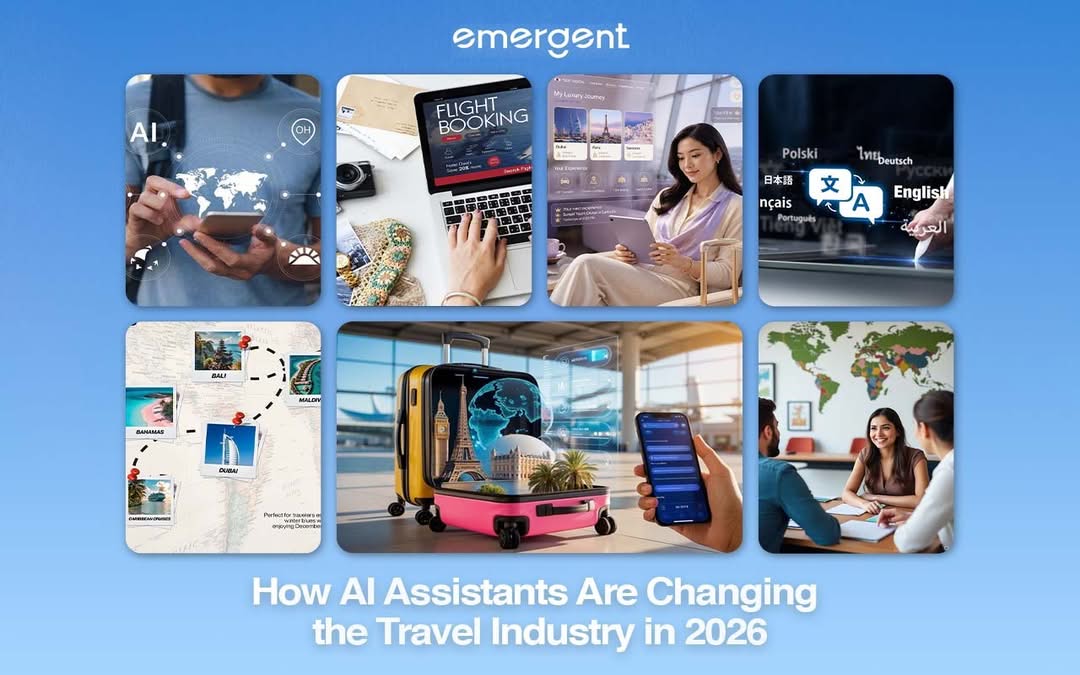
Here’s something you have probably noticed without really thinking about it: travel just feels different lately. It’s not the airport Wi-Fi; it’s the fact that AI assistants in travel have quietly worked their way into almost every part of the process. A couple of years ago, most of us used AI for the occasional quick question. Now, artificial intelligence in travel does a lot more, building itineraries, comparing flights, translating on the fly, and rebooking a hotel the second your plans fall apart.
As travel technology 2026 keeps moving forward, more of this happens through simple conversation instead of endless clicking. And it’s not just travelers who feel the shift; airlines and agencies are running their whole operations differently because of it.
What Are AI Travel Assistants, Really?
So what exactly are AI travel assistants? Nothing complicated. They’re AI tools built to understand plain, everyday language and hand back suggestions that actually make sense- no dropdown menus, no twenty filters to click through. Just say “hotels under $150 near the beach with a pool,” and that’s it. The assistant takes it from there.
Most of these tools can handle things like:
- Building out a full itinerary
- Comparing hotels and flights
- Suggesting destinations based on what you’re into
- Translating in real time
- Sending a nudge before something important
What really sets AI assistants in travel apart from older travel apps is memory. It always remembers your budget and preferences as the conversation continues, instead of starting from zero every time.
7 Ways AI Assistants Are Changing Travel in 2026
- Personalized Trip Planning
This is probably the biggest change of all, if we’re being honest. AI travel planning means you can describe your budget and interests, and how many days you’ve got, and get a workable itinerary back in minutes, not hours. Compare that to the old way: a dozen browser tabs, a random blog post from 2019, a forum thread that half-answers your question. It’s easy to see why AI assistants in travel caught on so fast.
- Smarter Flight and Hotel Searches
AI can scan all flights, hotels, and packages way faster than any of us scrolling through search results at midnight. Because it factors in what you’ve searched before, the suggestions actually feel relevant, not random, and every so often it turns up a better-value option you would’ve scrolled right past.
- Real-Time Travel Assistance
Travel doesn’t stop throwing curveballs once you’ve landed, and that’s exactly where AI assistants in travel earn their keep. Need a decent restaurant nearby? Stuck in traffic and need a new plan? These tools respond in seconds, and that matters a lot more than it sounds when you’re standing on an unfamiliar street corner trying to figure out what’s next.
- AI-Powered Language Translation
Language barriers used to be one of the more stressful parts of traveling abroad. Now, AI-powered travel translation tools handle live conversations, menus, and street signs with far more accuracy than the clunky phrasebook apps from a decade ago. It won’t make you fluent overnight, but it’ll make you feel a lot less lost.
- More Personalized Travel Recommendations
Generic “top 10 things to do” lists are starting to feel outdated. Artificial intelligence in travel is getting noticeably better at picking up on what actually interests a specific traveler- food, history, shopping, nightlife- instead of handing everyone the same list of tourist traps.
- Helping Travel Companies Serve Customers Faster
It’s not only travelers cashing in here. Airlines, hotels, and booking platforms are leaning on AI in the travel industry to answer questions, handle changes, and process cancellations without keeping people on hold forever. It’s part of why so many travel businesses now turn to platforms like Emergent to build their own AI-powered tools without a whole engineering team behind them.
- Making Travel More Accessible
AI is also quietly making travel easier for people with different needs, with simplified information, real-time translation, and personalized scheduling. For many travelers, this is just one more way AI assistants in travel are making the whole process a little less overwhelming.
How AI Is Changing the Travel Booking Experience
Booking used to mean opening a dozen tabs and comparing them until your eyes hurt. Now, AI travel planning lets you say what you want once and get a shortlist back almost instantly. It’s also opening the door for smaller businesses to compete. A boutique tour operator, for instance, can now build their own AI-powered booking assistant instead of leaning entirely on third-party sites. Still worth double-checking prices and cancellation terms directly with the airline or hotel before you hit confirm, AI is helpful, not infallible.
Benefits of AI Assistants for Travelers
Here’s the honest rundown of why AI assistants in travel caught on as fast as they did:
- Saves an absurd amount of research time
- Builds itineraries that actually feel personal
- Available at 2 am if that’s when you’re planning
- Makes international travel less intimidating
- Cuts through decision fatigue
- Answers quick questions on the go
Across the broader AI in travel industry, this has moved well past the early-adopter stage.
Challenges and Risks of Using AI for Travel
It’s not all smooth sailing, and it’d be dishonest to pretend otherwise. AI can occasionally give outdated or flat-out wrong information, and prices or availability sometimes shift faster than it can keep up with. There are real privacy concerns too, about how much personal data gets collected along the way.
And because AI assistants in travel are so convenient, it’s easy to start leaning on them a little too much, which matters, since AI-generated itineraries can miss local quirks a real traveler would’ve caught immediately. Visa rules, entry requirements, flight schedules- always worth confirming through official sources.
What Does the Future of AI-Powered Travel Look Like?
The future of travel probably involves AI at nearly every step, not just planning. Picture proactive assistants that flag problems before you notice them, voice-based planning, and real-time itinerary changes as your day shifts around you. Travel technology in 2026 is getting advanced tools that let companies build their own apps quickly, rather than wait on outdated software, and that are going to matter more. Platforms like Emergent reflect exactly that shift, giving businesses a much faster way to get an AI-driven product off the ground.
FAQs About AI Assistants in Travel
- How are AI assistants in travel actually used?
Mostly for planning, booking support, customer service, and real-time help once you’re already out there. - Can AI plan an entire trip?
Pretty much, yeah- flights, hotels, activities included. Just worth double-checking the actual bookings yourself. - What are the main benefits?
Convenience, personalization, speed, and being available whenever you happen to be free. - Is AI the future of travel planning?
Looks that way, though human judgment still matters for the details that genuinely count.
Final Thoughts
AI assistants in travel are making trip planning faster, easier, and honestly a lot more personal than it used to be. This isn’t about replacing your own judgment; it’s about handing travelers, and the businesses behind them, one more genuinely useful tool. Platforms like Emergent are helping make that future a bit easier to build. The best trips in 2026 will probably still come down to smart technology, local knowledge, and good old-fashioned human judgment.