
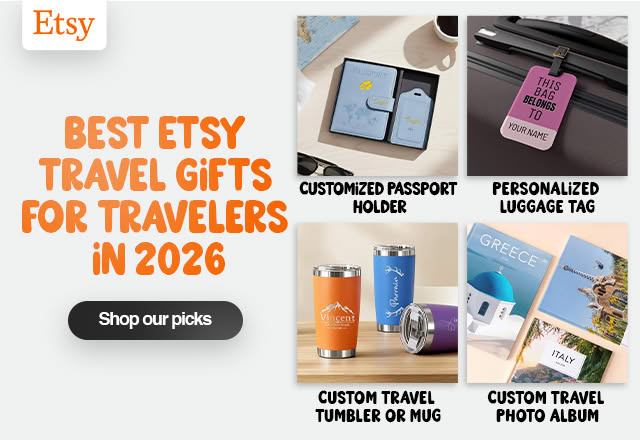
Shopping for a traveler can be tricky. They usually don’t need more stuff; they need the right stuff, practical enough to actually pack. That’s exactly why personalized and unique presents have become so popular among gifts for travelers this year. More shoppers are turning to Etsy, where handmade, customized, vintage, and creative finds make Etsy travel gifts stand out from anything you’d grab off a store shelf.
This list covers both practical travel gear and sentimental keepsakes, so whether you’re looking for travel gifts for men, women, or that friend who always seems to have their next trip planned, you’re sure to find something worth gifting.
Why Etsy Is Great for Unique Travel Gifts
Instead of the usual mass-produced items you see in airport shops, Etsy travel gifts stand out with unique designs, personal touches, and handmade details that make them feel special. Many shops offer personalization, names, initials, dates, or favorite destinations added right onto the product. Because most items come from small businesses, you’re supporting independent makers instead of big-box retailers.
With prices ranging from budget-friendly keychains to splurge-worthy leather goods, these gifts work for birthdays, anniversaries, going-away parties, or just because. They’re consistently some of the best travel gifts you can give a frequent flyer, and for many shoppers, they’ve simply replaced the generic mall run altogether.
15 Best Etsy Travel Gifts for Travelers in 2026
Here are 15 great picks, from useful travel essentials to thoughtful keepsakes they will actually love.
1. Personalized Travel Journal
A blank personalized journal makes a trip feel official. Grab one with a custom cover or embossed name, and it becomes the place where every itinerary, ticket stub, and late-night story ends up.
2. Customized Passport Holder
This one’s a no-brainer gift — everyone who flies needs a customized passport holder, and most people are still using whatever came free with their luggage. Swap it out for something with their initials on it, and it instantly feels like an upgrade.
3. Personalized Luggage Tag
If you only buy one thing off this list, make it this. It’s genuinely useful, cheap enough to feel like a stocking stuffer, and Etsy sellers do it in everything from leather to wood to acrylic.
4. Travel Jewelry Organizer
Anyone who’s dug through a tangled ball of necklaces mid-trip knows this pain. A little zip-up jewelry roll solves it instantly, and it’s the kind of gift people don’t buy for themselves but end up loving.
5. Personalized Travel Map
Scratch-off maps turn “places I’ve been” into something you can actually look at on the wall. Pin-style versions work too if scratching feels too permanent.
6. Custom Travel Tumbler or Mug
Not the most original idea on paper, but a good one in practice. A tumbler with their name or a favorite travel quote gets used constantly, whether that’s on a road trip or just the morning commute.
7. Travel-Themed Tote Bag
Every traveler ends up needing one more bag, for a beach day, a market run, or hauling snacks through security. A destination-print or personalized tote covers that gap nicely.
8. Personalized Toiletry Bag
A monogrammed toiletry bag doesn’t sound exciting until you realize how much nicer it is to dig through than a plastic ziplock. A solid pick if you’re shopping for travel gifts for women who like things organized.
9. Custom Travel Photo Album
This is the one that gets people a little emotional, especially couples or families printing photos from a big trip. In a world of camera rolls nobody scrolls through, a Custom Travel Photo Album still hits different.
10. Travel-Inspired Wall Art
For the person already decorating their apartment around their next trip — a city map print or travel quote keeps the wanderlust going even at home.
11. Personalized Travel Blanket
Long flights, road trips, camping, a soft blanket with their name or a photo on it earns its keep fast. It’s also just a genuinely cozy gift.
12. Travel Scratch-Off Poster
Similar idea to the scratch-off map, with more game-night energy. Great for someone who likes checking things off a list, or a family working toward a shared travel goal.
13. Customized Travel Keychain
Cheap, small, and personalized keychain with coordinates, initials, or a meaningful date. Works especially well for travel gifts for men, who tend to appreciate something simple that just does its job.
14. Handmade Travel Pouch or Packing Organizer
Cables, chargers, cosmetics- they all end up loose at the bottom of a bag eventually. A compact pouch fixes that, and once someone tries one, they usually end up buying two more.
15. Personalized Travel Gift Box
Can’t pick just one thing? Bundle a few together: a luggage tag, a passport holder, a small journal, maybe a keychain. It’s an easy way to give one of the best gifts for travelers without agonizing over a single perfect item.
How to Choose the Best Etsy Travel Gifts
Before you place your order, take a few minutes to check the details.
- Personalization: Always check spelling, initials, names, and dates before placing your order
- Material and quality: Read the full product description and details about the product
- Reviews: You should always check the customer reviews and photos for the products
- Shipping time: Making personalized gifts may take longer to prepare, so don’t cancel your order until the last minute.
- Seller ratings: Look for shops with good ratings and positive reviews.
- Return policy: Personalized gifts may have different return or exchange policies, so check the policy before placing an order.
- Size and practicality: Choose the right gift for the traveler that they can actually use on their trip
Final Thoughts
The best Etsy travel gifts mix usefulness with a personal touch. Think about the traveler’s habits: are they a minimalist packer, a photo-album keeper, or someone who tracks every country visited? Remember that the best gifts for travelers almost always feel handpicked, not generic. Since many of these items are handmade or personalized, order early so there’s no rush on shipping.